
Most investors should consider Saudi Arabia for Vision 2030-driven reforms, energy diversification, tourism and tech; you must weigh regulatory change and geopolitical risk against tax incentives and high returns when planning market entry.
The Great Transformation Landscape
Market Shifts
You can tap Vision 2030-driven growth and high-yield sectors, but expect regulatory shifts and geopolitical risk that demand careful legal and fiscal planning.
Foreign Investment Opportunities in Saudi Arabia
Strategic Industrial Frontiers
You should target Saudi industrial cities where generous incentives and special zones reduce setup costs, but expect regulatory complexity and local partner requirements; balancing these risks can deliver high returns in manufacturing, petrochemicals, mining and renewables.
The New Regulatory Architecture
Regulatory changes
You should assess the 100% foreign ownership in select sectors and the streamlined licensing that speed market entry, while also preparing for strict penalties for non-compliance that can endanger investments.
Digital Connectivity and Infrastructure
Connectivity and Projects
Saudi upgrades deliver nationwide 5G, new data centres and smart-city links so you can scale operations quickly; major giga-projects attract significant investment but rapid regulatory change and cybersecurity threats present clear risks to foreign investors.
Foreign Investment Opportunities in Saudi Arabia
Tourism and Cultural Capital
You can invest in hotels, resorts and cultural attractions as Saudi tourism booms, offering high returns, driven by rising visitor numbers and giga-projects. Assess local rules closely to avoid regulatory risk and respect heritage-protection limits that may restrict development, ensuring your project aligns with national cultural priorities.

Foreign Investment Opportunities in Saudi Arabia
Financial Markets and Capital Flows
You can access Saudi exchanges as reforms have eased foreign ownership and boosted market liquidity, offering attractive returns; however, currency and volatility risks persist, so assess capital controls, tax treatment and exit options before committing.
Summing up
Conclusively, you should consider Saudi Arabia for foreign investment due to diversified projects, regulatory reforms, attractive incentives and strategic location; you can expect growing returns in energy, tourism and technology sectors while complying with local regulations and partnering with experienced on-ground advisers for sustainable entry and risk management.
FAQ
Q: What sectors in Saudi Arabia offer the best foreign investment opportunities and what incentives are available?
A: The main sectors offering opportunities include renewable energy, petrochemicals, mining, tourism and hospitality, entertainment, logistics, digital services, healthcare and education. Vision 2030 and the Public Investment Fund’s giga‑projects such as NEOM, the Red Sea Project, Qiddiya and Diriyah present large‑scale opportunities and competitive procurement rounds. The Ministry of Investment of Saudi Arabia (MISA) issues foreign investment licences and provides a one‑stop service that can include tax concessions, customs exemptions and access to land in designated economic zones. The standard corporate income tax rate of 20% generally applies to non‑GCC foreign investors, Saudi/GCC entities are typically subject to Zakat, and a 15% VAT applies to most taxable supplies. Investors can obtain 100% foreign ownership in many activities, though certain sectors remain restricted or require specific approvals and local participation.
Q: What is the process and typical timeline for setting up a foreign‑owned company in Saudi Arabia?
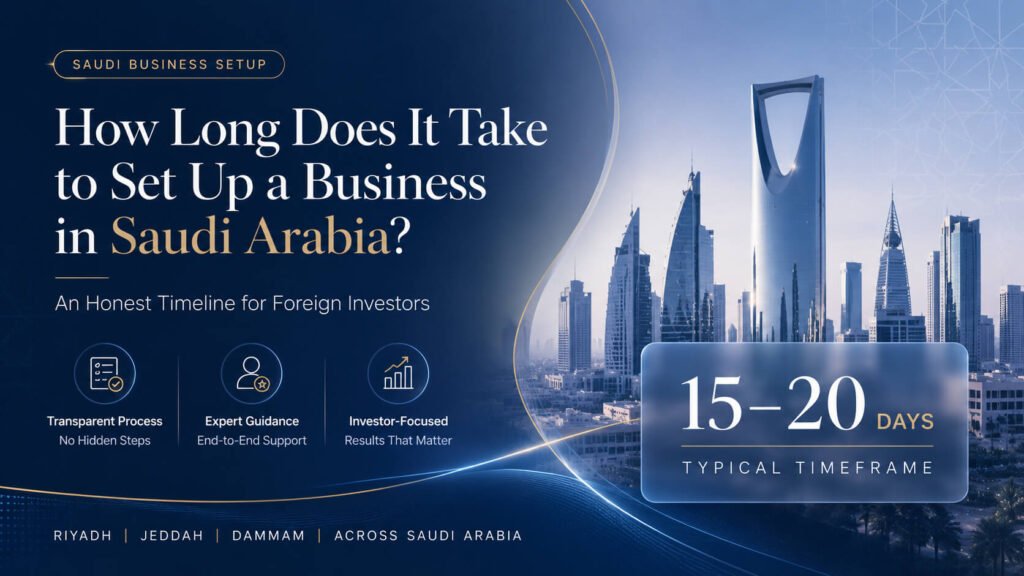
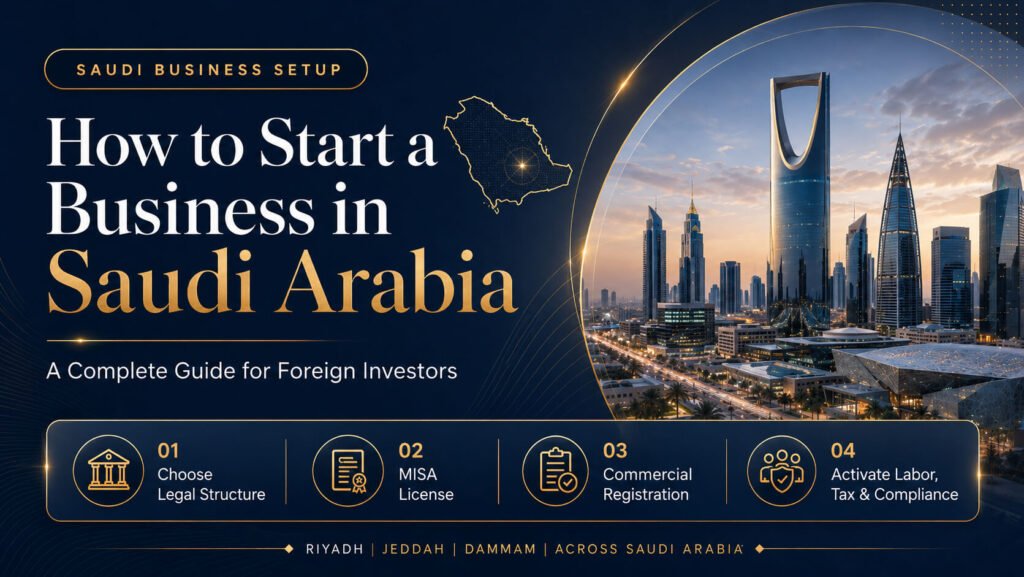
A: The usual process starts with market analysis and selection of an entity type, commonly a limited liability company, branch office or representative office. Applicants should secure a foreign investment licence from MISA before registering the company with the Ministry of Commerce and Industry. Subsequent registrations include the Zakat, Tax and Customs Authority (ZATCA), the General Organisation for Social Insurance (GOSI) and local municipal authorities, together with any sectoral licences required for regulated activities. Timelines depend on complexity; straightforward commercial entities can be established within two to six weeks, while regulated sectors and large projects often take several months to complete. Typical documentation comprises corporate formation papers, board resolutions, identity documents for shareholders and directors, a commercial lease or land agreement where applicable, and a business plan; engaging local advisers speeds preparation and submission.
Q: What key risks and practical considerations should foreign investors assess before committing capital?
A: Policy change and exposure to hydrocarbon market cycles are significant macro risks since incentive regimes and demand can shift with budget priorities and oil prices. Labour market considerations include Saudisation requirements and skills gaps in specific sectors, which affect recruitment, training and wage costs. The legal framework combines Sharia principles with commercial statutes; investors should evaluate contract enforcement, dispute resolution mechanisms and the enforceability of international arbitration clauses. The Saudi riyal is pegged to the US dollar, and capital repatriation is generally permitted subject to tax and reporting obligations. Practical measures to reduce risk include thorough legal and tax due diligence, appointing experienced local counsel or advisers, structuring entry via pilot projects or joint ventures where appropriate, and obtaining formal regulatory approvals before significant capital deployment.