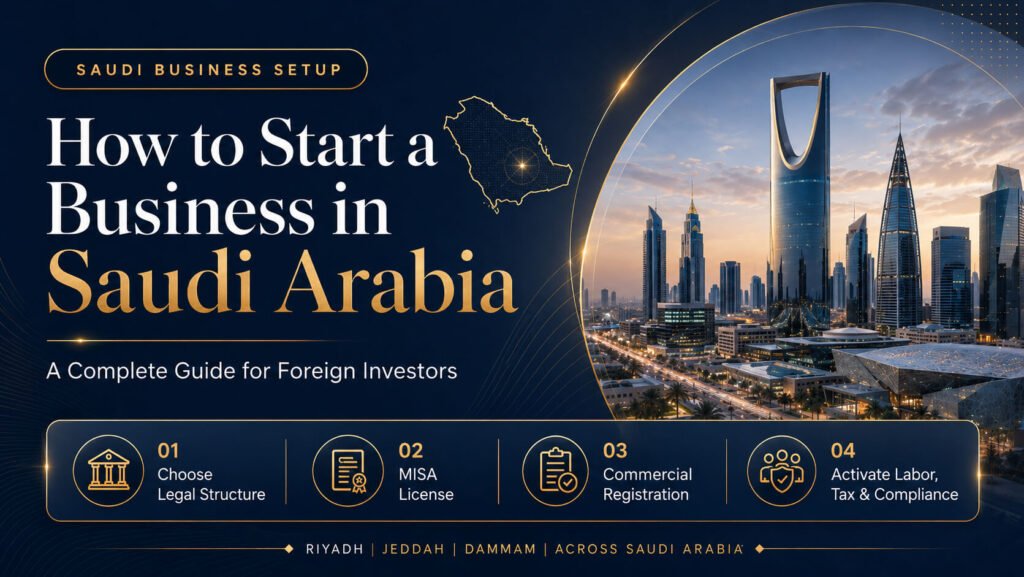

Setting up a business in Saudi Arabia offers tremendous opportunities for growth and expansion, but the path to successful market entry is paved with potential pitfalls. Many foreign investors, regardless of their experience in other markets, make avoidable mistakes that cost them significant time, money, and operational efficiency. Learning from these common errors before you begin your Saudi business journey can save you substantial resources and frustration. This comprehensive guide identifies the most frequent mistakes foreign investors make and provides practical advice on how to avoid them. For a comprehensive overview of doing it right, see our Complete Guide to Starting a Business in Saudi Arabia.
The Saudi business environment has unique characteristics that distinguish it from other markets. The regulatory framework, business culture, government processes, and market dynamics all have specific features that may be unfamiliar to international investors. Approaches that work well in other markets may be ineffective or counterproductive in Saudi Arabia. Taking the time to understand these differences and engaging experienced local partners can make the difference between a smooth market entry and a costly learning experience.
1. Not Engaging a Local Consultant Early Enough
One of the most common and costly mistakes foreign investors make is attempting to handle company formation and compliance matters without professional local guidance. The Saudi regulatory environment is complex, with multiple government agencies, Arabic-language processes, and frequently changing requirements. Investors who try to navigate this landscape alone inevitably encounter delays, rejections, and compliance issues that professional consultants would have helped them avoid. The upfront cost of engaging a reputable Saudi business consultancy is modest compared to the cost of mistakes, delays, and missed business opportunities that result from going it alone.
A good local consultant provides value beyond simply processing paperwork. They advise on the optimal business structure for your specific circumstances, help you select the right business activities that align with your objectives while avoiding unnecessary regulatory complications, maintain relationships with government agencies that facilitate smoother processing, stay current with regulatory changes that may affect your business, and provide ongoing compliance support that ensures your business remains in good standing. Elite Consulting Co. has helped hundreds of international investors establish successful businesses in Saudi Arabia and can help you avoid the mistakes that trip up DIY investors.
2. Choosing the Wrong Business Structure
Selecting an inappropriate business structure is a mistake that has long-term consequences for liability protection, tax obligations, and operational flexibility. Common errors include establishing an LLC when a Branch Office would be faster and simpler for the investor’s specific needs, choosing a joint venture structure with a Saudi partner when 100 percent foreign ownership is permitted and preferable, or failing to consider the Regional Headquarters option when the company qualifies for the substantial tax incentives. For a detailed comparison, see our guide on LLC vs Branch Office in Saudi Arabia. A thorough analysis of your business needs, growth plans, risk tolerance, and operational requirements should guide your structure selection rather than convenience or incomplete information.
3. Underestimating Documentation Requirements
Many foreign investors are surprised by the extent and specificity of documentation required for Saudi company formation. Documents from your home country must be properly translated into Arabic by licensed translators, notarized by authorized notaries, attested by the Saudi embassy or consulate in your home country or apostilled depending on your country’s treaty status, and in many cases, accompanied by certified copies rather than simple photocopies. Passports must be valid for at least six months, financial statements must be audited and current, and corporate documents must include proper board resolutions authorizing the Saudi investment. Failing to prepare and attest documents properly is one of the most common causes of application rejections and processing delays.
4. Ignoring Saudi Labor Law Nuances
Applying home-country human resources practices without adapting to Saudi labor law requirements is a recipe for compliance issues and potential legal exposure. Saudi labor law has specific requirements for employment contracts including mandatory Arabic language versions, detailed terms, and specific termination provisions. End-of-service benefit calculations follow specific formulas that differ from many其他国家. Probation periods are limited to a maximum of 90 days. Working hours, overtime rules, and leave entitlements are precisely defined. Employment contract termination follows specific procedures with notice periods and severance requirements. Working with an HR professional experienced in Saudi labor law is essential for avoiding costly compliance mistakes.
5. Delaying Government Registrations
Some investors delay registering with GOSI, MHRSD, or ZATCA, assuming they can do these registrations later when they hire employees or generate revenue. This is a mistake because late registration can result in penalties, backdated contribution demands from GOSI that may be substantial, delays in employee visa and Iqama processing that prevent you from deploying your workforce, and in some cases, restrictions on business operations until registrations are completed. These registrations should be initiated immediately after obtaining your Commercial Registration, even if you have not yet hired any employees or started generating revenue.
6. Misunderstanding Saudization Requirements
Some foreign investors assume that Saudization targets are recommendations rather than mandatory requirements, or that they can be addressed later when the business is more established. This assumption is dangerous because your Nitaqat classification directly affects your ability to hire and retain foreign employees. Companies that ignore Saudization quickly find themselves in Yellow or Red bands with severe visa processing restrictions that can bring business growth to a halt. For a complete guide, see our Saudization Nitaqat Guide for New Businesses. Developing a Saudization strategy from day one and monitoring your compliance status monthly on Qiwa is essential for maintaining operational flexibility.
7. Poor Record Keeping for Tax Purposes
Inadequate financial record keeping is a common mistake that leads to ZATCA audit issues, inability to claim legitimate input VAT deductions, incorrect tax filings that attract penalties, and difficulties in preparing audited financial statements. Saudi tax law requires businesses to maintain complete records for at least 10 years, including sales and purchase invoices, contracts, bank statements, payroll records, and correspondence with tax authorities. Implementing proper accounting systems from the start and maintaining diligent record keeping practices is essential for tax compliance.
8. Choosing Office Space Impractically
Some foreign investors sign expensive long-term office leases before understanding their actual space requirements, leading to paying rent for space they do not need for months while visa processing is completed, being locked into unsuitable locations that do not serve their client base or operational needs, or committing to lease terms that do not align with their business growth trajectory. Starting with a virtual office or flexible co-working space until you have a clear understanding of your actual requirements is a prudent approach that avoids expensive mistakes.
9. Not Budgeting for Ongoing Compliance
Focusing only on the initial setup costs and underestimating ongoing compliance expenses is a common budgeting mistake. Annual costs for CR renewal, MISA license renewal, municipality license renewal, external audit, VAT filing services, GOSI contributions, professional license renewals, insurance, and accounting software can total SAR 50,000 to SAR 150,000 or more per year depending on your company size and activities. These ongoing costs must be factored into your financial projections and pricing strategy to ensure your Saudi operation is sustainable.
10. Overlooking Cultural and Business Etiquette
Business in Saudi Arabia is built on personal relationships and trust. Foreign investors who fail to invest time in building relationships, schedule meetings during prayer times, ignore local customs and business etiquette, or communicate inappropriately with government officials damage their credibility and effectiveness. Understanding and respecting Saudi business culture including the importance of personal connections, the role of hospitality, appropriate communication styles, and the decision-making process in government and business is essential for success.
How Elite Consulting Co. Prevents These Mistakes
Elite Consulting Co. provides comprehensive support that helps foreign investors avoid these common pitfalls. For information on realistic setup timelines, see our guide on how long company formation takes in Saudi Arabia. Our pre-setup consultation identifies risks and develops mitigation strategies specific to your business. Our document management ensures all paperwork is correct, complete, and properly attested. Our compliance monitoring keeps you ahead of regulatory requirements. Our expert guidance provides the benefit of years of Saudi business experience and established government relationships.
Contact us to discuss your investment plans and we will help you avoid the mistakes that trip up other foreign investors entering the Saudi market.